Six decisions that make the next conversation clearer
Every property is different, but the sequence below helps separate immediate concerns from the drying and repair decisions that follow.
Protect people first
Avoid standing water near electrical sources, unstable ceilings, and contaminated water. If the area is unsafe, keep clear.
Stop the source when practical
Shut off a fixture or water supply only when it can be done safely. Roof and weather entry may require a different temporary measure.
Document the starting condition
Photos and a simple list of affected rooms and materials can make later conversations more specific.
Remove accessible water
The appropriate method depends on the amount of water, the source, and the materials involved.
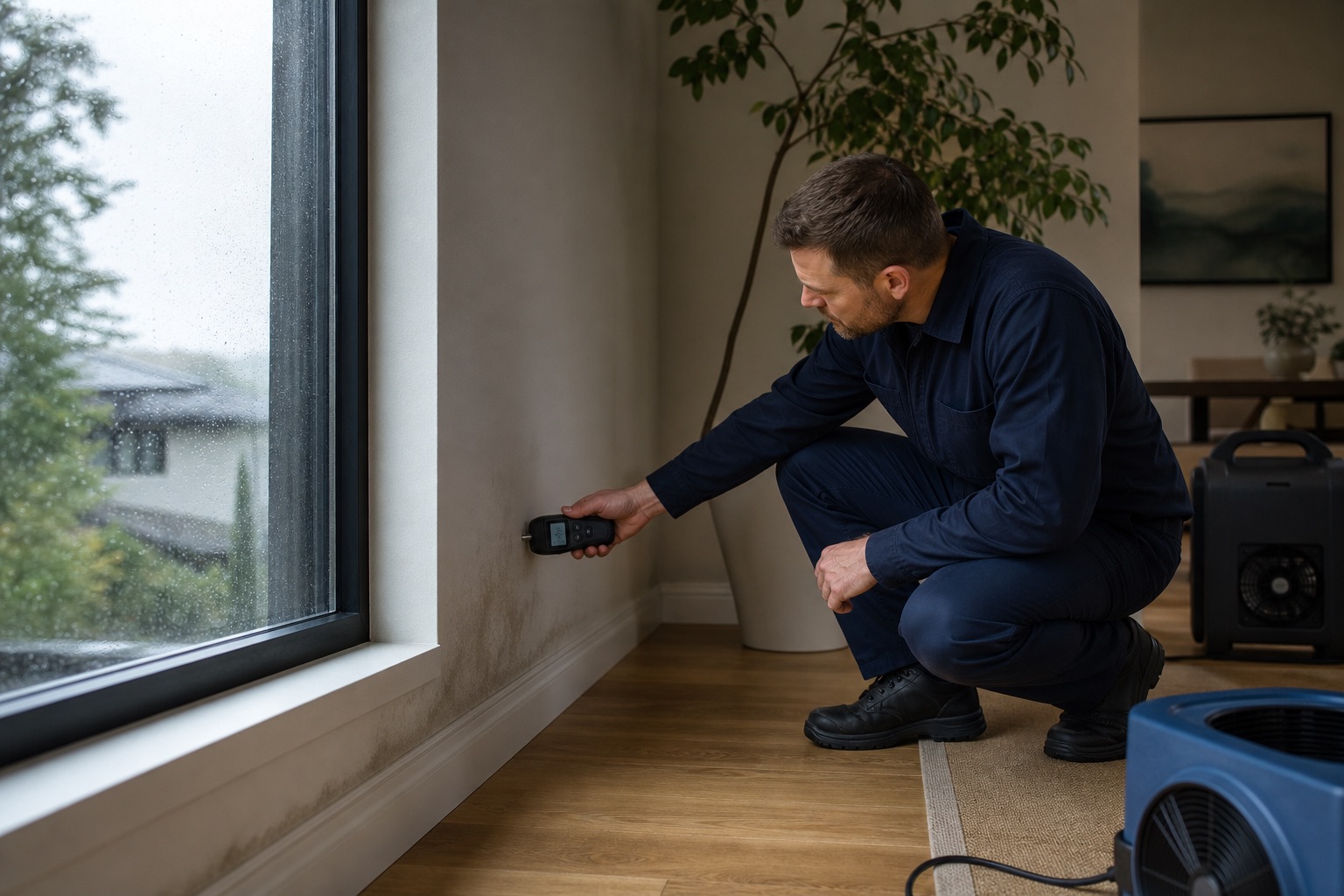
Check beyond the visible edge
Flooring layers, wall cavities, trim, cabinets, and rooms below can hold moisture that is not obvious.
Build the drying and repair plan
Drying, cleanup, material removal, and reconstruction are related but distinct decisions.
What a useful Bellevue service conversation should cover
Bellevue properties face a familiar mix of long wet seasons, roof and window exposure, dense construction, finished lower levels, and everyday plumbing failures. A good plan should fit the actual building and affected materials—not a generic checklist.
Ask how the source, material layers, connected rooms, and any area below the visible damage affect the plan. A clear explanation should separate immediate water removal from moisture checks, controlled drying, cleanup, and any repair work that may follow.
Questions worth asking before work moves forward
- Which materials and rooms are included in the affected area?
- How will remaining moisture and drying progress be evaluated?
- What can potentially dry in place, and what conditions could change that decision?
- What information will support the handoff to cleanup or repairs?